
Taxi & Private Hire
Self Assessment for Taxi and Private Hire Drivers
Tax Returns for Drivers
Do I Need to File a Tax Return?
If you drive a taxi or a private hire vehicle as a self-employed driver, including work through ride-hailing apps, you usually need to register for Self Assessment and file a tax return every year. I help drivers register, keep simple records, claim the right expenses and file on time, in English or Turkish.
Key Dates for the 2025 to 2026 Tax Year
| What | Deadline |
|---|---|
| Register for Self Assessment (if you started in 2025 to 2026) | 5 October 2026 (if you missed it, register as soon as possible) |
| Paper tax return | 31 October 2026 |
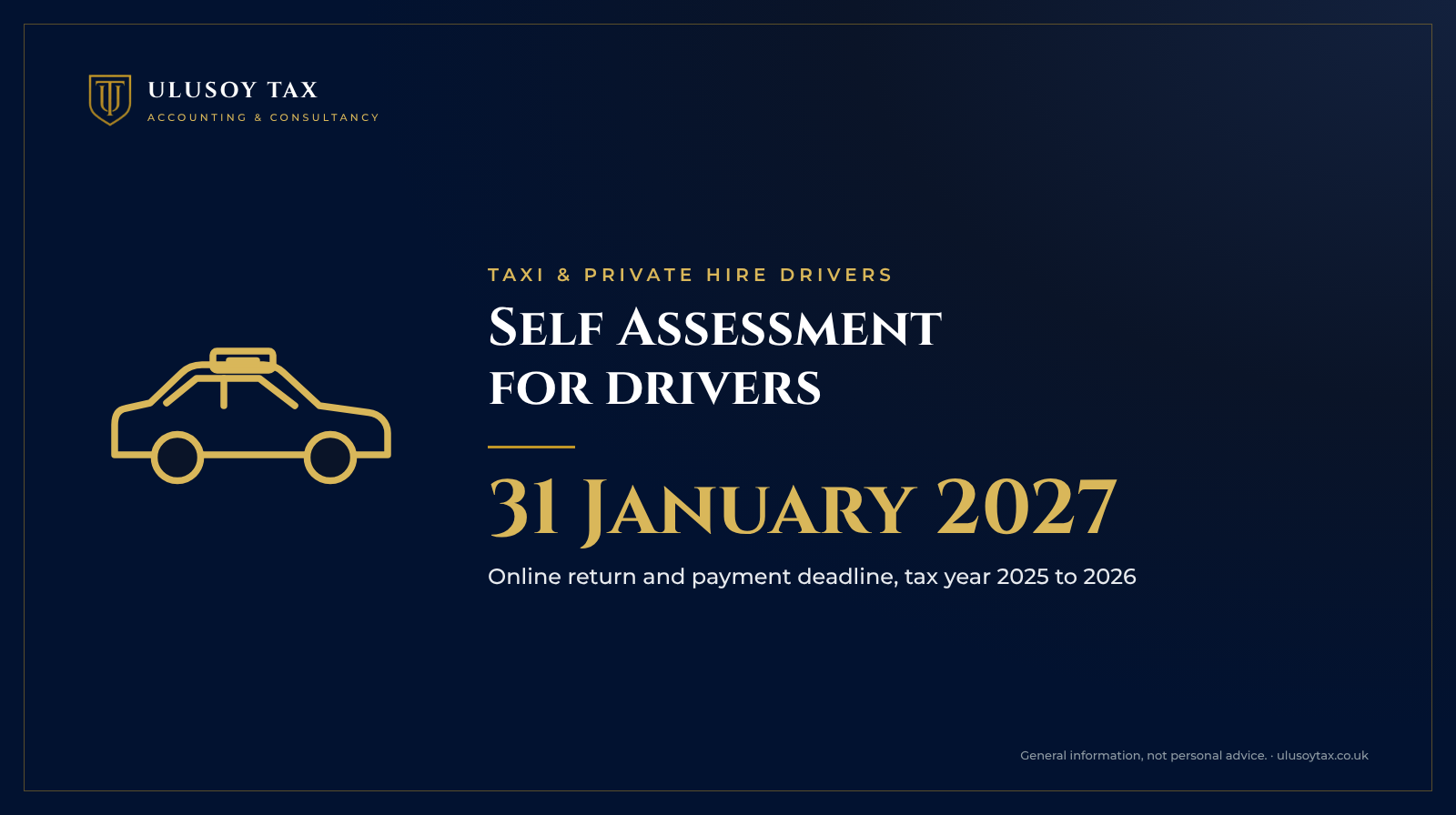
| Online tax return | 31 January 2027 |
| Pay any tax owed | 31 January 2027 |
Expenses and Mileage
Expenses You Can Usually Claim
- Fuel, insurance, repairs, servicing and MOT
- Vehicle hire or lease costs
- Taxi or private hire licence fees
- App and booking commission charged to you
- Mobile phone costs for work
- Car cleaning and parking while working
You cannot claim parking fines or other fines, or the private share of your vehicle costs.
Mileage Rate or Actual Costs?
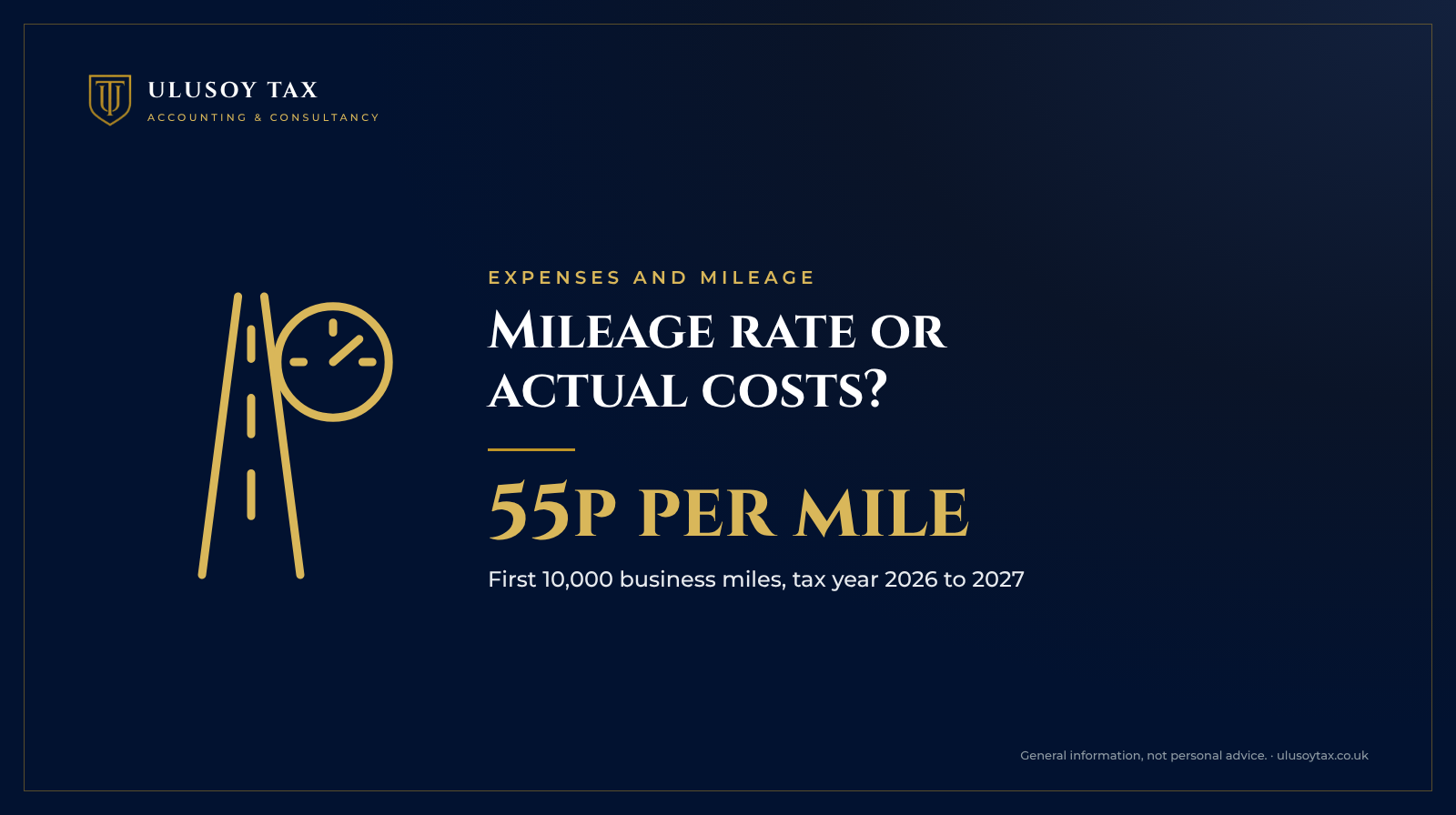
You can claim your actual vehicle costs, or use the flat mileage rate (simplified expenses):
| Tax year | First 10,000 business miles | Over 10,000 miles |
|---|---|---|
| 2025 to 2026 | 45p per mile | 25p per mile |
| 2026 to 2027 | 55p per mile | 25p per mile |
Simplified expenses cannot be used for cars designed for commercial use, such as black cabs and hackney carriages, or for a vehicle you have already claimed capital allowances on. Keep a mileage log either way.
Records to Keep
- App earnings statements and any cash fare records
- Receipts for fuel, repairs, insurance and licence fees
- A mileage log showing business and private miles
National Insurance, MTD and VAT
National Insurance
For the 2026 to 2027 tax year, self-employed drivers pay Class 4 National Insurance of 6% on profits between £12,570 and £50,270, and 2% above that. If your profits are £7,105 or more, Class 2 is treated as paid, so you do not pay it separately.
Making Tax Digital for Income Tax
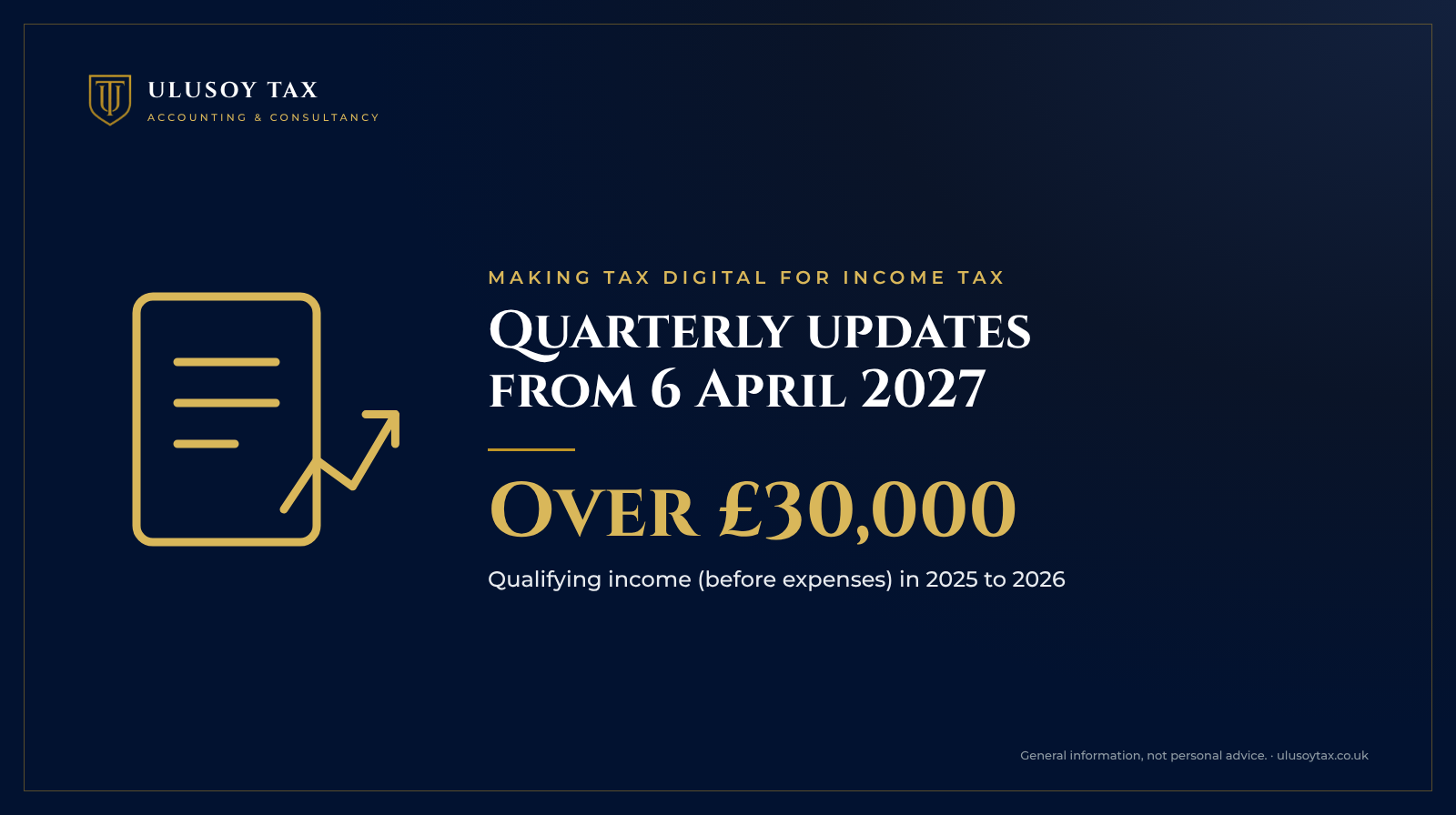
From 6 April 2027, sole traders and landlords with qualifying income over £30,000 in the 2025 to 2026 tax year must keep digital records and send quarterly updates to HMRC. Qualifying income is your total income from self-employment and property before expenses, so drivers with high fares may reach the threshold even if their profit is lower.
VAT
You must register for VAT if your taxable turnover goes over £90,000 in any rolling 12-month period.
How I Can Help
- Registering for Self Assessment and getting your UTR
- Setting up simple record keeping
- Preparing and filing your tax return
- Getting ready for Making Tax Digital
Contact me on WhatsApp or get an instant quote with the pricing calculator.
This page is general information based on GOV.UK guidance as of October 2026. It is not personal advice.